



Managing DME Billing Made Easier with the Easy Billing App
In the world of healthcare, billing has always been one of the most time-consuming and detail-oriented tasks. For DME (Durable Medical Equipment) providers, managing claims, payments, and compliance rules can feel overwhelming. Every piece of equipment from wheelchairs and oxygen supplies to hospital beds comes with specific codes, documentation, and billing procedures that must meet Medicare or insurance requirements. That’s where the Easy Billing App steps in a smart, reliable, and user-friendly platform designed to simplify the complexity of DME billing. It doesn’t just make billing faster; it helps healthcare professionals and suppliers manage their operations with confidence and accuracy. Why DME Billing Can Be So Challenging Before understanding how the Easy Billing App helps, it’s important to know what makes DME billing complicated.DME suppliers deal with strict compliance rules, frequent policy changes, and repetitive claim submissions. Each medical item requires the right HCPCS code, the right documentation, and approval from insurers or Medicare. Common challenges include: For small clinics or growing DME businesses, these issues can lead to cash flow problems and administrative stress. The Easy Billing App solves these pain points through automation and smart design. Introducing the Easy Billing App The Easy Billing App is a modern digital tool that brings efficiency and structure to medical billing. Built specifically for DME suppliers, healthcare professionals, and billing specialists, it automates much of the claim process from data entry to final payment tracking. It’s not just another billing app, it’s a complete system designed to save time, reduce errors, and speed up payments. With its simple interface, users can log in, upload patient details, generate claims, and track their status in real-time. It’s built to remove the guesswork from DME billing and make it manageable even for those who aren’t tech experts. How the Easy Billing App Simplifies DME Billing Let’s look at the step-by-step ways the app makes the entire billing process easier: 1. Smart Claim Creation Instead of manually typing every code or checking endless forms, the app lets you create claims with pre-set templates. It automatically fills in the correct DME codes and verifies missing information before submission. 2. Real-Time Validation Errors are one of the biggest reasons claims get rejected. The Easy Billing App validates all data instantly, ensuring accuracy in patient details, billing codes, and provider information before the claim goes out. 3. Faster Submission No more mailing forms or using multiple portals. The app allows direct electronic submission to insurance carriers or Medicare, cutting down on processing time and human error. 4. Live Claim Tracking Once submitted, users can monitor claim progress live whether it’s under review, approved, or pending. This transparency helps billing teams follow up faster and avoid payment delays. 5. Built-in Reporting Tools The app provides powerful reporting and analytics options. Users can track performance, identify bottlenecks, and review which claims were rejected or delayed. This helps businesses improve efficiency over time. The Benefits of Using Easy Billing App for DME Providers Accuracy and Compliance The app keeps your billing accurate and compliant with the latest Medicare and insurance standards. By reducing human error, it protects your revenue and prevents costly claim denials. Time Efficiency Automation saves countless hours of manual data entry and documentation. What used to take days can now be done in minutes. Better Cash Flow When claims are accurate and faster to process, reimbursements arrive on time helping healthcare businesses maintain steady cash flow. Secure and Reliable The app ensures that all patient and billing data is stored securely using HIPAA-compliant encryption, maintaining full confidentiality. Scalability Whether you’re a small clinic or a growing DME company, the app adapts to your needs. It can handle multiple users and growing claim volumes with ease. Why It Matters for San Diego’s Healthcare Providers For DME suppliers and medical providers in San Diego, CA, efficient billing is key to staying competitive and financially stable. The Easy Billing App gives them the advantage of automation and transparency, two things that can drastically improve how they operate. By using a single digital platform, they can manage all claims, patients, and payments in one place. The result is fewer errors, faster processing, and higher satisfaction for both patients and providers. In a city where healthcare demand is growing, using technology like the Easy Billing App can make a real difference in performance and profitability. A Real-World Example Imagine a small DME provider in San Diego handling dozens of claims every week. Before using Easy Billing, they struggled with missing documentation and delayed Medicare payments. After switching to the app, their claim approval rate increased by 40%, and payment turnaround time dropped from three weeks to five days. That’s the kind of impact automation can have real, measurable improvement in how a business runs. Future of DME Billing with Automation As the healthcare industry becomes more digital, billing automation tools are no longer optional; they’re essential.Apps like Easy Billing represent the future of medical billing efficiency combining smart software, accurate data validation, and fast communication with insurers. In the coming years, we can expect features like AI-based coding assistance, predictive claim approval rates, and deeper integration with EHR (Electronic Health Record) systems.The Easy Billing App is already paving the way for this transformation. Conclusion Managing DME billing no longer needs to be stressful or complicated. With the Easy Billing App, healthcare professionals can automate their billing workflow, reduce errors, and focus on what matters most to patients. By simplifying tasks like claim creation, submission, and payment tracking, the app empowers DME providers to take control of their finances and improve efficiency.In a fast-moving industry like healthcare, the Easy Billing App offers something invaluable: peace of mind, accuracy, and speed. FAQs 1. Who can benefit from using the Easy Billing App? The app is ideal for DME suppliers, medical clinics, and billing specialists who handle healthcare insurance or Medicare claims. 2. Is the app available on mobile devices? Yes. The Easy Billing App is available on Android devices through the Google Play Store,
What Is the Easy Billing App and How It Simplifies DME Billing in San Diego
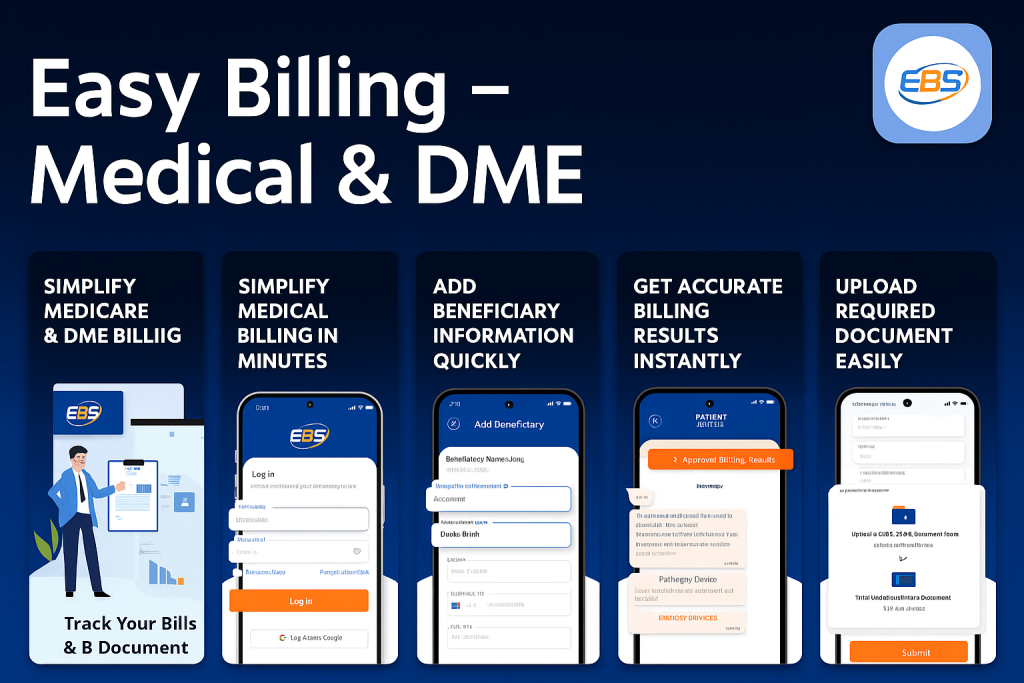
In today’s healthcare industry, billing isn’t just about sending invoices, it’s about managing accuracy, compliance, and speed. For medical providers and DME (Durable Medical Equipment) suppliers in San Diego, the billing process can be time-consuming and prone to errors. That’s where the Easy Billing App steps in. Designed to simplify and streamline the entire medical billing workflow, this app is transforming how healthcare professionals manage claims and payments. Let’s explore what the Easy Billing App does, how it works, and why it has become one of the most trusted tools for DME billing in San Diego. What Is the Easy Billing App? The Easy Billing App is an advanced billing management platform built for healthcare providers, DME companies, and medical billing specialists. It simplifies billing operations by automating repetitive tasks such as claim submission, payment tracking, and compliance checks. Whether you’re handling Medicare claims or insurance reimbursements, the app provides a single dashboard for all your billing needs. What makes it special is its user-friendly interface and real-time tracking system. From small clinics to large medical suppliers, anyone can easily access, manage, and monitor their billing without dealing with complex paperwork or outdated systems. How the Easy Billing App Works The app follows a simple, step-by-step process that even non-technical users can handle effortlessly. Once you log in, you can add patient details, input DME codes, attach supporting documents, and generate claims automatically. The app verifies the data before submission to ensure accuracy and minimize rejections. Here’s a breakdown of how it simplifies the process: This entire workflow helps billing teams avoid delays, manage compliance, and get reimbursed faster all within a few clicks. Why DME Billing Is Complicated Without Automation DME billing requires handling complex documentation, HCPCS codes, and Medicare regulations. Each medical equipment claim must meet strict requirements, and even a minor mistake can lead to rejections or delayed payments. Traditional manual billing often faces these problems: The Easy Billing App solves all these challenges by automating the billing process. It ensures that every claim follows the latest compliance standards while providing transparent updates at each step. Key Features of the Easy Billing App Here are some of the app’s standout features that make it ideal for DME billing in San Diego: 1. Automated Billing System The app reduces manual workload by automating claim creation, verification, and submission. This feature saves hours of repetitive work and minimizes human error. 2. Real-Time Claim Tracking Users can monitor claim progress, view payment updates, and get alerts when actions are needed — ensuring you never miss a payment. 3. Data Security and HIPAA Compliance The Easy Billing App is fully compliant with healthcare data privacy regulations. All patient and provider information is securely encrypted. 4. Multi-User Access The app supports team-based usage, allowing multiple billing specialists to collaborate on claims efficiently. 5. Reports and Analytics Generate monthly, weekly, or custom reports to review performance, identify bottlenecks, and plan improvements. 6. Integration with Medicare and Insurance Systems It seamlessly integrates with Medicare and other major insurance networks, ensuring faster reimbursements and compliance. Benefits for Healthcare Providers and DME Companies For medical equipment providers in San Diego, billing accuracy is essential. Here’s how the Easy Billing App benefits users: By combining technology with practical functionality, the app ensures that billing becomes a smooth and predictable process rather than a stressful one. How It Helps in DME Billing in San Diego San Diego’s medical industry is growing rapidly, and so is the need for accurate billing systems. DME suppliers deal with a variety of medical equipment such as wheelchairs, oxygen machines, and hospital beds all of which require specific billing codes. The Easy Billing App helps local providers by: For San Diego’s healthcare community, this means more productivity, fewer billing delays, and higher revenue retention. Future of DME Billing with Easy Billing App As the healthcare sector continues to evolve, automation tools like Easy Billing are becoming the backbone of billing departments. The app’s continuous updates, integration with new payment systems, and AI-based verification features will make billing even faster and more reliable in the future. In short, Easy Billing App is not just a tool, it’s a digital assistant that simplifies every aspect of medical billing. Conclusion The Easy Billing App is transforming the way DME suppliers and healthcare professionals manage billing in San Diego. It streamlines processes, minimizes errors, and accelerates payments, allowing providers to focus more on patient care. Whether you’re a small DME company or a large medical organization, adopting this app can help you gain better control over your billing workflow and stay compliant with industry regulations. If you’re looking for a smarter, faster, and more reliable way to handle DME billing in San Diego, the Easy Billing App is your perfect partner. FAQs 1. Who can use the Easy Billing App? The app is ideal for DME suppliers, healthcare professionals, and billing specialists who manage insurance and Medicare claims. 2. Is the Easy Billing App available for mobile devices? Yes, it’s available on the Google Play Store, allowing users to manage claims on the go. 3. Does it support Medicare billing? Absolutely. It supports Medicare, Medicaid, and private insurance billing, ensuring compliance with all necessary standards. 4. How does the Easy Billing App reduce errors? It uses automated validation tools that detect missing or incorrect data before claims are submitted. 5. Can multiple users access the same account? Yes, billing teams can collaborate efficiently using the app’s multi-user access feature.
How to Streamline Insurance Claims with Billing Services for Mental Health Providers

Efficiently processing insurance claims is essential for any mental health practice. In today’s competitive healthcare environment, many providers are discovering that partnering with billing services for mental health providers can transform administrative workflows, reduce claim denials, and ensure timely reimbursements. This article is intended to make the case for professional billing services as a means of improving the capture of claims, outline the modern revenue source benefits outline, and provide tips on how to choose the right partner for the practice. Importance of Billing Services For Mental Health Providers A new set of obstacles emerges for mental health practices when billing needs to be managed. Claims filed via insurance can be overwhelming because they are often coupled with reimbursement delays, as well as litigation and coding issues. Such an integrated system greatly reduces the time taken for claims to be processed, minimizes errors when processing claims, and enhances the overall financial well-being of any organization. The truth is that providers, through collaborative arrangements with certain specialists, can emphasize their focus on quality caregiving to patients instead of paperwork. Certainly, it is with those robust-looking billing services that professionals are turning to today for mental health providers, with the aim of improving operational efficiency as well as raising revenue. Such a strategic move is vital for the maintenance of competitiveness. The Role of Specialized Billing Solutions State-of-the-art medical billing features modern and dynamic medical billing solutions, ready to answer all the specific needs tied to mental health service provision: with advanced software and skilled teams trained to handle complex insurance rules and compliance requirements, clinics can benefit from customized billing solutions designed specifically for therapists and mental health specialists. Billing insurance for therapists helps ensure claims are charged accurately and on time. Likewise, psychotherapy billing services do this by ensuring that all necessary documentation is in the proper format and complies with the current standards. While therapy practice billing solutions offer customized services that address the specific financial challenges of mental health care. With the right system, medical billing for mental health practices can be transformed from a daunting task into a spa-like, easy, and predictable revenue cycle. Key Advantages of Professional Billing Partnerships Increased Accuracy and Compliance Errors in claim submission can lead to costly denials and delays. By relying on experts familiar with billing services for mental health providers, practices can drastically reduce the risk of mistakes. The Behavioral Health billing companies that specialize in mental health will guarantee that all these submissions meet all the stringent compliance requirements. Then, of course, practices would also benefit from HIPAA-compliant mental health billing systems, which ensure the safety of sensitive patient data while being fully compliant with regulations. Enhanced Revenue Cycle Management Robust revenue cycle management is crucial for maintaining budgeting operations that are financially stable for mental health services. The outsourced billing with therapists empowers clinics to gain both through well-learned teams focusing on reimbursement optimization. Besides that, billing software for mental health providers is one of the best tools to ensure proper claims recording, tracking, and managing of every claim to enable revenue to flow continually into the business. Streamlining the Claims Process When practices operate with billing services for mental health providers, claim turnaround times improve and claim denial rates reduce. A systematic approach to every claim is put into place by these professional services to guarantee that any activities regarding that claim are handled precisely, from patient intake to their eventual reimbursement. Such a systematic procedure minimizes the delay and enhances payment speed, which is critical for sustaining the practice’s cash flow. Incorporating Technology and Software In the present-day world, there is a huge range of software and technology that improve billing operational efficiency. Several practices adopt billing software for mental health providers to automate some common routines. Those include claim generation and claim status tracking. Such software can easily be fully integrated with patient management systems for easy reconciliation of patient records with insurance claims. In addition, very strong security features are incorporated into modern-day billing platforms, which automatically ensures HIPAA-compliant mental health billing. Such systems obviously offer real-time status updates on claims and various reporting features, allowing practices to keep a close eye on their financial health. Best Practices for Reducing Denials One of the biggest hurdles faced by mental health providers is reducing any instances of claim denials. There are many reasons for denials, with the most common being information missing or incorrect, coding mistakes, or failure to follow the rules laid down by the insurance company. Following the best practices of having two sets of eyes to review entries to make sure they’re accurate, remaining current on all medicare billing requirements, and performing regular audits on claims will solve many of those issues. Additionally, practices can outsource dme billing services to specialized firms that utilize expertise and technology. These measures, combined with expert insights from billing services for mental health providers, can significantly reduce errors and boost reimbursement rates. Choosing the Right Billing Partner It is very important to distinguish between an insurance claim and a billing partner to maximize efficiency. Practices should consider various variables when opting for a billing partner. The focus should be on tactics like mental health billing expertise, technological capabilities, and compliance records. Key Considerations Real-World Impact on Mental Health Practices Most of the mental health practices have improved drastically in their financial well-being after they shifted to dedicated billing services. A recent case study reported a practice that reduced claims denials by more than 40% as an aftereffect of the installation of sophisticated mental health billing. This improvement was credited to the systematic and error-free functioning of the billing partner. Furthermore, those practices that have chronic difficulties in managing insurance papers and making the clients happy can now postulate improvements on the same issue. Such improvements allow most of the therapists more time to spend on patient care rather than on administrative tasks. Providers can redirect resources to further enhance the quality of care by focusing
NPI Type 1 vs Type 2: Which One Do You Need and Why It Matter

If you’re stepping into the world of healthcare billing, credentialing, or setting up your practice or business, you’ve probably heard of NPI numbers. But here’s where things get tricky. Because there are actually two types, and while both seem similar on paper, they serve very different purposes. So let’s walk through this in a way that makes sense, without the jargon or overly technical detours. We’re going to clear the fog surrounding NPI Type 1 vs Type 2, figure out which one you need, and why making the right choice can make or break your medical billing and reimbursement process. What Even Is an NPI Number? NPI stands for National Provider Identifier, a unique 10-digit number assigned by the Centers for Medicare & Medicaid Services (CMS). This number is used to identify healthcare providers across the United States in all kinds of administrative transactions, whether it’s billing, credentialing, or working with insurance payers. It acts as a digital fingerprint for providers, ensuring that your identity is recognized consistently, no matter where or how you’re practicing. But here’s where things get a little more detailed: there isn’t just one type of NPI. There are actually two, and that’s where the confusion often begins. Understanding the difference between NPI Type 1 vs Type 2 is crucial because choosing the wrong one can disrupt everything from claim processing to reimbursement timelines. Whether you’re an individual healthcare provider or running a full-fledged clinic, knowing how NPI Type 1 vs Type 2 applies to your specific situation is key to staying compliant and efficient. Sounds straightforward, right? Well, not quite. Because there are two different types: And that’s where the confusion begins. NPI Type 1 vs Type 2: Let’s Break It Down Here’s a simple comparison: Criteria NPI Type 1 NPI Type 2 Who Gets It Individual providers Healthcare organizations or businesses Example Dr. Smith, an individual practitioner Smith Family Clinic, LLC Required For Credentialing, individual claims Billing for group or facility services Linked To SSN or EIN? SSN (Social Security Number) EIN (Employer Identification Number) Can One Person Have Both? Yes Yes You can absolutely have both if you’re a solo practitioner running a business. You’ll use your Type 1 NPI when billing as an individual and your Type 2 NPI when billing as your company or organization. Why Choosing the Right NPI Type Actually Matters If you’re sending out claims to insurance or Medicare and using the wrong NPI type, you’re inviting headaches. Rejected claims. Delayed reimbursements. Confused payers. Imagine being a DME supplier in California and submitting claims under your individual NPI (Type 1) when you’re actually operating under an LLC. You’re not only risking non-payment but potentially setting yourself up for compliance issues. Here’s why the NPI Type 1 vs Type 2 decision is critical: If you’re a provider thinking of starting your clinic, you’ll need to plan this out carefully from the start. NPI Types and Credentialing Essentials for Doctors Credentialing is where a lot of the confusion hits. If you’re a solo provider, credentialing under your Type 1 NPI makes sense. But what if you’re operating under a business name or a group? That’s where the Type 2 NPI kicks in. When insurance payers credential your group or clinic, they’re credentialing your Type 2 NPI. But when they credential you personally as the treating provider, that’s your Type 1. And yes, you can, and often should, have both. Real-Life Example: A DME Billing Scenario Let’s say you’re a DME provider working out of California. You’ve set up shop legally, filed for an LLC, and are ready to go. You need to: This structure ensures your DME billing services in CA run smoothly, and claims are routed properly. The Contracts and Billing Connection The type of NPI you use directly influences your contracts. If you have contracts for medical billing services, they may need to list your Type 2 NPI, especially if the agreement is with your business entity. For solo providers without an established company, it’s your Type 1 that will appear on contracts and forms. And when it comes to the cost of medical billing services, it often varies depending on whether you’re billing under an individual or organizational model. However, when billing under a Type 2 NPI, you’re representing an organization, such as a clinic, group practice, or DME supplier, which usually involves a higher claim volume, multiple providers, more complex insurance contracts, and added administrative layers. All of this can impact the cost structure. Billing companies often charge a higher percentage for Type 2 setups due to the increased coordination, compliance requirements, and processing complexity involved. Understanding this distinction between NPI Type 1 vs Type 2 can help you better evaluate and negotiate your billing service agreements. For instance, medical billing company percentage rates can vary significantly depending on whether you’re operating under a Type 1 or Type 2 NPI setup. When billing under a Type 1 NPI, you’re usually working as a solo provider, which often means lower patient volume, fewer claims, and a more straightforward billing structure. In such cases, the billing percentage may be lower because the workload is more predictable and easier to manage. So, Which One Do You Really Need? Let’s simplify: Remember, payers care about this. Your credentialing team cares. Your billing company cares. When you’re setting up credentialing, negotiating contracts, or choosing a DME billing company in CA, this question of NPI Type 1 vs Type 2 will be front and center. In Conclusion The divide between NPI Type 1 vs Type 2 isn’t just technical red tape. It’s the foundation for everything that follows in your healthcare career, from how you bill, to how you’re paid, to how your patients receive care. Getting this wrong could slow down your payments or put you in legal hot water. Getting it right means cleaner claims, fewer denials, and faster reimbursements. Clarity matters. And whether you’re new to this or simply reassessing your setup, one truth remains: Understanding your NPI
How the Inflation Reduction Act Is Changing Medicare Drug Coverage (Part D) in 2025

Prescription drugs are one of the biggest expenses for people on Medicare, and many seniors have long struggled with rising prices. The Inflation Reduction Act (IRA), signed into law in 2022, is designed to change that. Its new rules are rolling out in stages, and 2025 is the year when some of the most important protections finally take effect. If you’re wondering how this law will affect your out-of-pocket drug costs, which medications are impacted, and what steps you should take, this article breaks it all down in plain language. What’s Changing in 2025? The Inflation Reduction Act introduced several reforms to Medicare Part D, the prescription drug program. While some changes (like free vaccines) already took effect in 2023, the biggest updates arrive in 2025. Here are the highlights: How Much Will Beneficiaries Actually Save? Savings will vary depending on your prescriptions, but experts estimate that millions of Americans will see lower costs in 2025. For example: Which Drugs Are Affected? Not all drugs are negotiated immediately. The first wave includes some of the most widely used medications for diabetes, cancer, and heart conditions. More will be added over time as Medicare expands its negotiation authority. Even if your specific medication isn’t on the 2025 negotiation list, the overall cost environment is shifting downward. That means drugmakers face pressure to keep prices in check. What Should You Do as a Medicare Beneficiary? With these changes, 2025 is an important year to review your plan and coverage. Here are a few steps to consider: Things to Watch Out For While the Inflation Reduction Act brings major relief, there are still a few pitfalls to keep in mind: Final Thoughts The Inflation Reduction Act is reshaping Medicare Part D in 2025, giving beneficiaries long-awaited relief from runaway drug costs. With the $2,000 annual cap, free vaccines, and the beginning of price negotiations, seniors can finally breathe a little easier when filling prescriptions. Still, the details matter. Taking time during open enrollment to review your plan ensures you get the full benefits of these new rules. With smart planning, you can make the most of these changes and keep more money in your pocket while staying on the medications you need.
Ways to Lower Your Out-of-Pocket Costs in Medicare: Tips & Assistance Programs

Healthcare is one of the biggest expenses for retirees, and even with Medicare, many people are surprised by how much they still pay out of pocket. Premiums, deductibles, copayments, and coinsurance can add up quickly especially if you need regular prescriptions or ongoing treatment. The good news? There are practical strategies and assistance programs that can help you cut costs without sacrificing care. If you’re looking for ways to stretch your healthcare dollars in 2025, this guide is for you. Understand What “Out-of-Pocket” Really Means When we talk about out-of-pocket costs, we’re referring to all the expenses you pay directly beyond your monthly premiums. These include: Knowing exactly where your money is going is the first step toward reducing it. Assistance Programs That Can Help Several government programs are designed to help people with limited income and resources manage their Medicare costs: Applying may feel overwhelming, but local State Health Insurance Assistance Programs (SHIPs) can guide you through the process for free. Reduce Prescription Drug Costs Drug prices are often one of the biggest financial burdens. Here are a few smart ways to cut costs: Medigap vs. Medicare Advantage: Choosing Wisely How you structure your coverage can make a big difference in your long-term costs: The right choice depends on your health needs and budget. Reviewing your situation each year helps ensure you’re not overpaying. Everyday Tips to Keep Costs Down Beyond assistance programs and insurance choices, a few simple habits can reduce your out-of-pocket spending: Final Thoughts Healthcare costs may feel overwhelming, but you have more control than you think. From enrolling in assistance programs like Extra Help and Medicare Savings Programs, to making smart choices about prescriptions and plan selection, there are proven ways to lower your out-of-pocket spending. In 2025, with new policy changes bringing even more relief, now is the perfect time to review your coverage and make adjustments. A little effort can lead to big savings and more peace of mind knowing you’re protected.
Medicare Open Enrollment 2025: Deadlines, Common Mistakes & How to Avoid Penalties

Every year, Medicare offers a crucial window when you can review, change, or update your healthcare coverage. This period is known as Medicare Open Enrollment, and in 2025, it runs from October 15 to December 7. While it may not sound exciting, the decisions you make during these weeks can significantly affect your healthcare and finances in the year ahead. Miss a deadline, choose the wrong plan, or skip a review, and you could end up paying higher costs or facing penalties. This guide will help you understand the key dates, the most common mistakes people make, and how to avoid costly missteps. What Happens During Medicare Open Enrollment? Medicare Open Enrollment (sometimes called the Annual Election Period) is the time when you can: The changes you make take effect on January 1, 2025. Key Dates to Remember 👉 Miss the December 7 deadline? You may have to wait until next year unless you qualify for a Special Enrollment Period (SEP). Special Enrollment Periods (SEPs) Explained Not everyone is locked into the October–December window. Certain life events allow you to make changes outside of Open Enrollment. Examples include: If you fall into one of these categories, you’ll get a SEP, but you’ll need to act quickly deadlines vary depending on your situation. Common Mistakes During Open Enrollment Despite all the reminders, many people still make costly errors. Here are the big ones to watch out for: Penalties to Avoid Medicare penalties are no joke they can last a lifetime. Here’s what you need to know: The takeaway? Even if you’re healthy and rarely need prescriptions, it’s best to enroll on time. A Handy Checklist for Open Enrollment 2025 ✅ Review your current plan’s 2025 changes (you’ll get a notice in the mail). ✅ Make a list of your medications and doctors. ✅ Compare available plans in your area using the Medicare Plan Finder. ✅ Double-check network coverage for your preferred doctors and hospitals. ✅ Enroll or make changes before December 7, 2024. Final Thoughts Medicare Open Enrollment 2025 is your chance to take control of your healthcare coverage. By knowing the deadlines, avoiding common mistakes, and staying on top of penalties, you can ensure you’re getting the coverage that best fits your needs and your budget. Healthcare is one of the biggest expenses in retirement. Spending a little time now to make smart choices will give you peace of mind all year long.
Medicare Advantage vs. Original Medicare: Which Is Best for You in 2025?

Turning 65 or planning for retirement means making some big healthcare decisions and one of the most confusing is choosing between Original Medicare and Medicare Advantage. At first glance, both seem to offer similar coverage. But dig a little deeper, and you’ll see big differences in cost, flexibility, and benefits. As we move into 2025, new rules and updates make this choice even more important. If you’ve been wondering which option is right for you, this guide will walk you through the pros, cons, and key changes to expect this year. Original Medicare: The Classic Choice Original Medicare, run directly by the federal government, is the traditional program most people think of when they hear “Medicare.” It’s made up of: One of the biggest advantages of Original Medicare is freedom. You can see nearly any doctor or hospital in the country that accepts Medicare, with no need to stay in a specific network. For people who travel frequently or split their time between states, that flexibility is a huge plus. But there are downsides too. Original Medicare does not cover prescription drugs, dental, vision, or hearing. That means you’ll likely need to buy a separate Part D plan for prescriptions and possibly a Medigap (supplemental insurance) to help with out-of-pocket costs like deductibles and coinsurance. Medicare Advantage: The All-in-One Alternative Medicare Advantage (also called Part C) works differently. These plans are offered by private insurance companies approved by Medicare. Instead of getting Parts A and B directly from the government, you get your coverage through the insurance company. The big selling point? Bundled benefits. Most Advantage plans include drug coverage, and many go further by adding extras like dental, vision, hearing, and even wellness perks such as gym memberships. In 2025, we’re seeing Advantage plans expand even more with broader telehealth services and richer dental and vision coverage. For many seniors, that makes Advantage a very attractive option. The trade-off is network restrictions. Most Advantage plans work like HMOs or PPOs, meaning you need to use their doctors and hospitals. Go outside the network, and you may pay much more or have no coverage at all. What About Costs in 2025? When it comes to money, the difference between the two options really matters: Which Should You Choose? There’s no one-size-fits-all answer. Your decision should come down to your health needs, budget, and lifestyle: Final Thoughts Deciding between Medicare Advantage and Original Medicare in 2025 is more than just a paperwork choice it can shape how easily you access care and how much you’ll spend. The good news? Both options are designed to protect your health; it’s just a matter of finding which one matches your priorities. Before enrolling, take time to compare plans in your area, review your current prescriptions, and think about your future care needs. A little research now can save you thousands later and give you peace of mind knowing your healthcare is covered.
ICD 10 Code for Weight Loss Counseling: Everything Providers Need to Know

Dietary counseling in clinical practice is becoming increasingly important as weight-related conditions such as obesity and metabolic syndrome are on the rise. Weight loss counseling is not merely patient education, but is a documented medical service that helps with preventive care and better clinical outcomes. With the rising obesity rates and the popularity of value-based care, payers expect more precision and proof in the way services are billed. It is no longer optional to understand how to correctly report and support dietary interventions. For healthcare providers, coding can directly influence reimbursement and compliance standing. Weight loss counseling is mainly coded under the ICD 10 code for weight loss counseling, also identified as Z71.3, which is dietary counseling and monitoring. This code is applicable in case a provider provides specific nutritional advice to assist patients in weight management or weight reduction. Why Z71.3 is the Key to Reimbursable Nutrition Counseling After assigning Z71.3, providers explicitly inform payers that the visit was aimed at structured and clinically supported dietary advice. This allows the weight-related discussions to be billed as a valid service provided, as long as the documentation is available to validate the claim. When used correctly, Z71.3 not only reinforces your compliance but also makes sure that preventive efforts are not left uncompensated. Appropriate coding also ensures that medical records provide a complete picture of the patient’s care plan. For instance, the ICD 10 code for weight loss counseling should be used in combination with a BMI code (Z68.x) and an obesity diagnosis code (E66.x) when they are applicable. This strategy supports the medical necessity and enhances the integrity of claims, particularly in audits. Reasons Supporting ICD 10 Weight Loss Counseling Codes Matter One of the biggest pitfalls in weight loss counseling claims is using Z71.3 as a standalone code. While it is valid, most insurance companies need supporting diagnoses, e.g., E66.9 (obesity, unspecified) or E66.01 (morbid obesity), to justify the service. Adding BMI values using Z68.x provides a quantitative background to justify why counseling was necessary. This dual coding strategy will provide your billing staff with a solid basis for clean claim submission and will also support patient care documentation. Providers who consistently code weight loss services accurately are more likely to avoid denials and experience smoother revenue cycles. For example, a primary care physician could code Z71.3 to indicate a nutritional counseling visit, and also code E66.01 if the patient has morbid obesity. Accurate documentation of diet discussions (e.g., food choices, meal plans) supports these codes and helps avoid denials. This is even more important when billed under the value-based care systems or under payers who require justification for preventive interventions. Key Considerations When Coding Weight Loss ICD 10 Some of the best practices that can help towards valid coding and the highest reimbursement outcomes are: How to Code Unintentional Weight Loss In the event that weight loss was not expected, then it has to be reported otherwise. The accurate ICD 10 code for weight loss in this situation is R63.4, which refers to abnormal (unexplained) weight loss. The code is used in the event of a patient who lost >5% of body weight over 6-12 months without a change in diet or exercise. It is a sign of an underlying cause (e.g., thyroid disorder, cancer) that must be investigated further. In these situations, Z71.3 would not be applied if dietary counseling is given. Instead, the provider’s intent is diagnostic, not preventive. Medical records must indicate this distinction so claims are not mistakenly misclassified. This DX code for weight loss helps identify unexpected conditions such as hyperthyroidism, malabsorption, or malignancy, and ensures that the appropriate follow-up care is coded accurately. Coding for Weight Management There are cases when patients require assistance not in losing weight, but in living a healthy lifestyle or avoiding health risks in the future. In such situations, the associated codes are Z72.4 (inappropriate diet) and specific codes of obesity, such as E66.811 (Obesity, Class 1). Combining Z71.3 with the ICD 10 code for weight management options will facilitate correct billing. Such a strategy demonstrates that the visit was aimed at lifestyle intervention, although the weight of patient did not change. For instance, a patient having a BMI of 32 and prediabetes may receive counseling to avoid further weight gain. The service is medically necessary and billable when correctly documented, even when the weight has not changed at the time of the visit. Significance of Linking Documentation and Diagnosis Providers should combine coding with documentation. Detailed notes on the subjects of counseling, nutrition plans, calorie objectives, and follow-up plans support claims. If possible, correlate counseling with lab orders or comorbidities (e.g., patient has diabetes, code counseling related to their diabetes). This level of detail can avoid claim denial. Auditors and payers both want transparent and traceable rationale for each billed code. It is not sufficient to state “I gave dietary advice”. Things to note: Discussed low-carb diet and 1,500 kcal a day with a plan of losing 10 lb. in 8 weeks. For more information on compliant documentation, see a comprehensive guide on understanding medical documentation. ICD-10 Quick Reference Table ICD-10 Code Description Z71.3 Dietary counseling and surveillance (weight loss counseling) R63.4 Unexplained (abnormal) weight loss E66.9 Obesity, unspecified (diagnosis code for weight loss) Z68.x BMI categories (document the patient’s body mass index) Z72.4 Inappropriate diet and eating habits (weight management) Real-World Example: A Family Medicine Practice An internal audit revealed that documentation of nutrition sessions was inconsistent, since then, one family medicine practice began coding every nutrition session with Z71.3 (in addition to pairing it with Z68 BMI codes and an E66 obesity code). The clinic noted that there were tremendous gains in acceptance of preventive counseling claims. Staff education targeted the connection of notes and codes: when the diet plan was discussed, Z71.3 was documented. That practical modification, combined with audit feedback, helped reduce billing rejection and enhanced the clinic’s profile of preventive care. This case confirms the reality of coding accuracy having
DME Billing in 2025: What Healthcare Providers Need to Know

DME billing is always changing. Every year brings new rules, tools, and steps. In 2025, these changes are faster than ever. Providers must stay ready. If not, they may face more denials, delays, and stress. This blog will show what has changed in 2025. It will help you stay ahead in DME billing and avoid future problems. 1. More strict billing rules In 2025, payers want clean claims. Small mistakes now cause full denials. They check everything twice before they approve payment. If your claim has one error, it may get rejected. Even simple things like codes or missing notes matter more now. Your billing team must follow each rule with care. Double-check forms, modifiers, and records before sending anything. 2. Strong need for proof DME items like beds, braces, or oxygen now need stronger proof. The old way of short doctor notes will not work. Payers want full notes, signed orders, and reason why the item is needed. Missing anything means the claim will fail. In 2025, each claim must include a full story. Show why the item helps the patient and is truly needed. 3. Pre-approval is growing fast More items need pre-approval before billing. In 2025, even simple equipment now needs a green light from the payer. If you skip pre-approval, the claim is denied. This causes more work, delay, and unpaid items at your clinic. Make a checklist of items that need it. Call the payer first and follow the right steps every time. 4. Automation is now a must Manual billing is too slow for 2025. More clinics now use tools to send, track, and fix claims in real time. These tools stop human error. They also help you get paid faster and give live updates on every claim. Easy Billing Services LLC® uses smart billing systems. We work faster and cleaner using tools that save time and fix errors. 5. Payer systems are smarter Insurance systems now use AI to scan claims. They find mismatched codes or missing notes faster than before. This means billing needs more care. If you use old systems or bad codes, your claim may be flagged or denied. You need a billing team that understands new rules. Your system must match what payers expect in 2025. 6. Denial rates are higher In 2025, many clinics are seeing more denials. This is because of tighter rules and faster claim checks by payers. If your team does not track denials daily, you may lose money without even knowing it. Easy Billing Services LLC® handles denials fast. We fix and resend them quickly so you do not lose any payment. 7. More focus on compliance In 2025, compliance is key. CMS and HIPAA rules are now stricter. Small mistakes can bring fines or billing freezes. This includes using wrong codes, missing records, or sending claims without full consent. Make sure your billing partner follows rules. Easy Billing Services LLC® trains our team on every new update and rule. 8. Paper billing is almost gone Paper claims are now too slow for 2025. Most payers will reject paper files or delay their approval process. If your clinic still uses paper or fax, it’s time to upgrade. You may be losing weeks in every payment cycle. Switch to full digital billing now. Our systems send claims in seconds and give instant claim updates every day. 9. DME audits are more common Audits are rising in 2025. Payers check if the item was really needed and billed the right way. If you miss papers or overcharge, you may face audits, fines, or blocked payments. Easy Billing Services LLC® helps keep your billing clean. We store all records safely and follow all audit steps fast. 10. Expert billing partners matter more In 2025, billing is not a task — it is a full process. You need a partner who knows every DME rule. General billing companies may miss small DME steps. That can cause delay, rejection, and loss of payment. Easy Billing Services LLC® is a DME billing expert. We follow all 2025 updates and help your clinic grow faster.